Veterinaria (Montevideo), 2026 62(226), https://doi.org/10.29155/VET.62.226.7
Artículo original
Occurrence and antimicrobial resistance profiles of enterobacteria in treated poultry manure and agricultural soils in Uruguay
Resistencia antimicrobiana y ocurrencia de enteropatógenos bacterianos en estiércol de aves de corral y en suelos agrícolas en Uruguay
Resistência antimicrobiana e ocorrência de bactérias enteropatógenas em dejetos de aves de corte e em solos agrícolas no Uruguai
Yamila Figueroa1, 2 https://orcid.org/0000-0002-2218-482X
Carla Stoletniy1 https://orcid.org/0009-0002-7066-7460
Jimena Posada1 https://orcid.org/0009-0003-0662-6696
Juan Silvera1, 2 https://orcid.org/0009-0006-8950-4118
Pablo Zunino1, 2 https://orcid.org/0000-0003-2375-1408
Ana Umpiérrez1, 2 https://orcid.org/0000-0002-5897-0400
1Departamento de Microbiología, Instituto de Investigaciones Biológicas Clemente Estable, Montevideo, Uruguay.
2Centro de Investigación en Ciencias Ambientales, Montevideo, Uruguay. Correspondence author: aumpierrez@iibce.edu.uy / anitaump@gmail.com
Cómo citar este artículo:
Figueroa, Y., Stoletniy, C., Posada, J., Silvera, J., Zunino, P., & Umpiérrez, A. (2026). Occurrence and antimicrobial resistance profiles of enterobacteria in treated poultry manure and agricultural soils in Uruguay. Veterinaria (Montevideo), 62(226), e20266222607. https://doi.org/10.29155/VET.62.226.7
Abstract
Land application of poultry production manure requires safe management strategies to evaluate and mitigate the dissemination of antimicrobial-resistant bacteria and opportunistic pathogens into agroecosystems This study evaluated the presence of zoonotic pathogens and their antimicrobial resistance profiles in poultry manure before and after composting, anaerobic digestion, and Quick Wash treatments, as well as in soils fertilized with these amendments. All samples were processed through bacterial isolation, molecular identification, and susceptibility testing against 17 antibiotics.
A total of 106 isolates were collected and screened. Enterobacteria predominated (98.6 %), mainly Klebsiella spp. and E. coli. Among 37 E. coli isolates, virulence genes compatible with EPEC were identified in three isolates, and other virulence factors in four additional isolates. Antibiotic resistance was observed across all isolates from treated manure and soil, particularly against β-lactams, quinolones, aminoglycosides, and fosfomycin. Twelve multidrug-resistant isolates were identified, mainly Klebsiella spp., Enterobacter spp., and E. coli, with resistance associated with AmpC β-lactamases. None of mcr-1, mcr-2, mcr-5 and mcr-9 genes for colistin resistance, were detected.
These findings demonstrate the presence of antibiotic-resistant enterobacteria in soils and poultry manure and also its persistence in poultry manure after physical, chemical and biological treatments. The presence of antibiotic-resistant enterobacteria highlights the need for monitoring and mitigation strategies to control the environmental spread of antimicrobial resistance.
Keywords: Poultry manure, Zoonosis, Antimicrobial resistance, Multidrug resistance, Agricultural soil.
Resumen
La aplicación agrícola de residuos de la producción avícola requiere estrategias de gestión seguras para evaluar y mitigar la diseminación de bacterias resistentes a los antimicrobianos y patógenos oportunistas en los agroecosistemas. Este estudio evaluó la presencia de patógenos zoonóticos y sus perfiles de resistencia antimicrobiana en residuos avícolas antes y después de tratamientos de compostaje, digestión anaerobia y Quick Wash, así como en suelos fertilizados con estas enmiendas. Todas las muestras fueron procesadas mediante aislamiento bacteriano, identificación molecular y pruebas de susceptibilidad frente a 17 antibióticos.
Se recolectaron y analizaron un total de 106 cepas. Predominaron las enterobacterias (98,6 %), principalmente Klebsiella spp. y E. coli. Entre las 37 cepas de E. coli, se identificaron genes de virulencia compatibles con EPEC en tres cepas y otros factores de virulencia en otras cuatro cepas. Se observó resistencia a los antibióticos en todas las cepas procedentes del estiércol tratado y del suelo, en particular contra los β-lactámicos, las quinolonas, los aminoglucósidos y la fosfomicina. Se identificaron doce cepas multirresistentes, sobre todo de Klebsiella spp., Enterobacter spp. y E. coli, con resistencia asociada a las β-lactamasas AmpC. No se detectó ninguno de los genes mcr-1, mcr-2, mcr-5 o mcr-9, responsables de la resistencia a la colistina.
Estos hallazgos demuestran la presencia de enterobacterias resistentes a los antibióticos en el suelo y el estiércol avícola, así como su persistencia tras tratamientos físicos, químicos y biológicos. La presencia de enterobacterias resistentes a los antibióticos resalta la necesidad de estrategias de monitoreo y mitigación para controlar la propagación ambiental de la resistencia a los antimicrobianos.
Palabras clave: Residuos avícolas, Zoonosis, Resistencia antimicrobiana, Multirresistencia, Suelos tratados.
Resumo
A aplicação de resíduos da produção avícola no solo exige estratégias de gestão seguras para avaliar e mitigar a disseminação de bactérias resistentes a antimicrobianos e patógenos oportunistas em agroecossistemas. Este estudo avaliou a presença de patógenos zoonóticos e seus perfis de resistência antimicrobiana em resíduos avícolas antes e após tratamentos de compostagem, digestão anaeróbia e Quick Wash, bem como em solos fertilizados com essas emendas. Todas as amostras foram processadas por meio de isolamento bacteriano, identificação molecular e testes de suscetibilidade a 17 antibióticos.
Um total de 106 isolados foi coletado e analisado. As enterobactérias predominaram (98,6 %), principalmente Klebsiella spp. e. coli. Entre os 37 isolados de E. coli, foram identificados genes de virulência compatíveis com EPEC em três isolados e outros fatores de virulência em mais quatro isolados. Observou-se resistência a antibióticos em todas as cepas provenientes de esterco tratado e solo, particularmente contra β-lactâmicos, quinolonas, aminoglicosídeos e fosfomicina. Foram identificadas doze cepas multirresistentes, principalmente de Klebsiella spp., Enterobacter spp. e. coli, com resistência associada às β-lactamases AmpC. Nenhum dos genes mcr-1, mcr-2, mcr-5 ou mcr-9, responsáveis pela resistência à colistina, foi detectado.
Esses resultados demonstram a presença de enterobactérias resistentes a antibióticos no solo e no esterco de aves, bem como sua persistência após tratamentos físicos, químicos e biológicos. A presença de enterobactérias resistentes a antibióticos destaca a necessidade de estratégias de monitoramento e mitigação para controlar a disseminação ambiental da resistência antimicrobiana.
Palavras-chave: Resíduos avícolas, Zoonoses, Resistência antimicrobiana, Multirresistência, Solos tratados.
Fecha de recibido: 06/05/2026
Fecha de aceptado: 17/09/2026
Introduction
The emergence and spread of antibiotic-resistant pathogenic bacteria represent one of the main threats to global health. For decades now, the widespread misuse of antimicrobials in both human and veterinary medicine, along with the use of antibiotics as animal growth promoters -nowadays banned in many countries- have significantly contributed to the selection and dissemination of antibiotic-resistant bacteria in the environment (Samreen et al., 2021). Multidrug-resistant (MDR) strains complicate the treatment of human and animal infections, prolong clinical conditions and increase the risk of pathogen spread (Leibler et al., 2009). In this sense, the World Health Organization (WHO) periodically updates the list of bacterial priority pathogens of public health importance, where multidrug-resistant (MDR) Gram-negative Enterobacterales -such as Escherichia coli, Klebsiella pneumoniae, and Enterobacter spp.- are designated as critical priority pathogens (World Health Organization, 2024). Identifying and monitoring these MDR Gram-negative bacteria across environmental and agricultural settings is essential from a One Health framework, as the spread of resistance to critical antimicrobials directly compromises last-resort therapeutic options required for managing life-threatening clinical infections in humans, particularly in intensive care units (ICUs) (World Health Organization, 2024).
Intensification and industrialization of animal production have improved yields and reduced costs, but they have also negatively impacted animal welfare, increased environmental contamination and promoted the dissemination of antibiotic-resistant pathogens, elevating the risk of zoonotic diseases (Leibler et al., 2009). Such spillover of pathogens consequently affects workers in poultry establishments, where an increased prevalence of enteric bacterial infections has been reported (Price et al., 2007; van den Bogaard et al., 2001).
The large volumes of manure generated in poultry production create the need for safe management and valorization. Manure is widely recognized for its nutrient content, supporting its use as organic fertilizer, and legislation for its application has been established in several countries. In Uruguay, regulatory frameworks for manure management have been in place since 2018 (Ministerio de Ganadería, Agricultura y Pesca, 2018). Ensuring the safety of this type of waste before reuse is critical, particularly because pathogens from animals can cause over 60 % of zoonotic infections in humans (Chala & Hamde, 2021), and in many cases carry several antimicrobial resistance genes.
Different zoonotic enterobacteria have been documented in Uruguayan production systems. Shiga toxin-producing Escherichia coli (STEC), the etiological agent of bloody diarrhea and hemolytic uremic syndrome, has been isolated from healthy dairy calves, animals with neonatal diarrhea, and calves deceased from enteric disease, sometimes showing multidrug resistance (Coppola et al., 2020; Fernández et al., 2023; Umpiérrez et al., 2022). Salmonella enterica serovar Enteritidis has been recovered from eggs (Betancor et al., 2010), and multidrug-resistant enteric S. enterica has been detected in cattle (Casaux et al., 2019; 2023).
Beyond primary zoonotic pathogens such as E. coli and Salmonella spp., other members of the Enterobacteriaceae family -including K. pneumoniae, Enterobacter spp., Proteus spp., and Serratia spp. as well as other Gram negative species like Vibrio fluvialis-, play critical roles as opportunistic pathogens in both veterinary and human medicine. In poultry, these bacteria are frequently associated with opportunistic infections, including respiratory disorders, omphalitis, and systemic infections, particularly under intensive production conditions (Abreu et al., 2023). In humans, species such as K. pneumoniae and Enterobacter spp. are leading causes of healthcare-associated and community-acquired infections, such as pneumonia, urinary tract infections, and sepsis (Ullah et al., 2024). Importantly, these species frequently harbor intrinsic or mobile antimicrobial resistance determinants (e.g., AmpC β-lactamases and extended-spectrum β-lactamases), acting as major environmental reservoirs and vehicles for horizontal gene transfer between livestock, the environment, and humans (Motlhalamme et al., 2024).
Pathogenic microorganisms like E. coli and Salmonella spp. can survive for months in fresh poultry manure and poorly managed wastewaters (Kyakuwaire et al., 2019). Even so, due to its nutrient composition, poultry manure has potential as a fertilizer, and different strategies have been developed for its valorization. These include: (i) composting, an aerobic biological process transforming organic matter into nutrient-rich fertilizer, where thermophilic temperatures usually eliminate pathogens (Ayilara et al., 2020); (ii) anaerobic digestion, used for biogas production and manure stabilization, in which mesophilic microorganisms play a key role, and the thermal control can limit pathogen survival (Xu et al., 2022); and (iii) Quick Wash, a USDA-developed technology that reduces soluble phosphorus, recovers nutrients, decreases odors, and generates products suitable as soil amendments or bioenergy sources (Szogi et al., 2015). Additionally, one strategy to enhance the composting processes is to use effective microorganisms (EM). This microbial consortiums have been used with the objective to increase enzymatic activities, promote biodegradation of organic matter and accelerate the composting process (Van Fan et al., 2018). While all these strategies offer significant benefits, it is critical to ensure that treatments are effective in eliminating pathogenic microorganisms and reducing the risk of spreading antimicrobial resistance in the environment.
The objective of this study was to evaluate the presence of the zoonotic pathogens Shiga toxin-producing Escherichia coli (STEC) and Salmonella spp., as well as to isolate and characterize the diversity and antimicrobial resistance profiles of Enterobacteriaceae (including opportunistic pathogens such as Klebsiella spp. and Enterobacter spp.) in poultry manure from broiler and breeders farms before and after treatment processes, and in soils treated with these organic amendments. To this end, four sample groups were evaluated: composted poultry manure (CM), bioreactor-treated poultry manure (BR), Quick Wash-treated poultry manure (QW), and agricultural soil amended with these treated poultry manure products (ST).
Materials and methods
Origin of the samples
A total of 88 poultry manure samples were processed: composted poultry manure (CM) (n = 73), bioreactor-treated poultry manure (BR) (n = 12) and Quick Wash (QW) (n = 3), with each group including a subset of untreated poultry manure. Poultry manure samples were processed progressively upon arrival at the laboratory throughout the study duration. Initial sampling and raw manure collection were carried out within the framework of a project supported by the National Institute of Agricultural Research (INIA) (project code: FPTA-374), the full primary results of which are beyond the scope of the present manuscript. Because raw poultry litter was routinely supplied to the processing facilities from commercial farms, specific flock- or batch-level traceability prior to laboratory delivery was outside the operational scope of this study.
In addition, 18 agricultural soil samples were collected from a controlled field trial designed to evaluate the agricultural application of these treated manure products. The soil evaluation comprised untreated soil (ST-US), baseline/initial soil (ST-SI), and soil amended with each treatment (ST-CM, ST-BR, and ST-QW). Throughout this manuscript, CM, BR and QW are referred to as treated poultry manure, whereas ST refers to agricultural soil after amendment application. Additionally, the composting processes included a subset of composted poultry manure treated with MEN® (Cooperativa Entrebichitos) (MEN, spanish acronym for Efficient Native Microorganisms), as these are commonly incorporated to enhance fermentation and pathogen reduction in different substrates such as wastewater (Echeverriborda et al., 2022; Van Fan et al., 2018).
Molecular screening of virulence and marker genes
Total DNA was extracted from the 106 samples to evaluate the presence of STEC genes: Shiga toxin (stx1 and stx2) and intimin (eae), and Salmonella spp. invasin gene (invA) by qPCR, using primers previously designed in our laboratory (González Revello, 2020). DNA extraction was performed using an automated system and PurePrep Pathogen kit (Molgen, Veenendaal, The Netherlands). Samples were diluted 1/10 in sterile PBS prior extraction. The purified nucleic acids were quantified with NanoDrop. Positive control strains were included in each PCR run: reference strain Escherichia coli O26:H11 (ATCC BAA-2196, positive for stx1, stx2 and eae), as well as fully characterized in-house reference strains from our laboratory collection for Escherichia coli O157:H7 (positive for stx1, stx2, and eae) and Salmonella enterica (positive for invA) (González Revello, 2020).
Bacterial isolation
For bacterial isolation, 20 g of each sample was incorporated in a sterile bag containing 200 mL of Tryptose Soy Broth (TSB; Oxoid Ltd., Basingstoke, UK) for 18-24 h at 37 °C. Enriched cultures were replicated on MacConkey (Oxoid Ltd.) and EMB Levine agar plates (BD, Franklin Lakes, NJ, USA) for 18-24 h at 37 °C. Suspected Enterobacteriaceae colonies, such as lactose-fermenting, were selected for further isolation and identification. For Salmonella spp. isolation, an aliquot (1mL) of TSB-enriched primary cultures was seeded in Tetrationate broth (TT; Oxoid Ltd.) for 24 h at 37 °C and replicated on XLD agar plates (Merck KGaA, Darmstadt, Germany) for 18-24 h at 37 °C. Suspected Salmonella spp. colonies were selected. All isolates were stored in TSB-Glycerol at -80 °C.
Phenotypic and molecular characterization of isolates
Lactose-positive colonies were initially identified using conventional biochemical tests (Octavia & Lan, 2014) and further confirmed by 16S rDNA gene sequencing (Macrogen Inc.). Colonies resembling Salmonella spp. on XLD plates (pink-red with black centers) were confirmed by PCR using primers previously designed in our laboratory (González Revello, 2020) and further validated by matrix-assisted laser desorption/ionization time-of-flight mass spectrometry (MALDI-TOF MS).
Screening of virulence genes in E. coli isolates included Shiga toxins genes: stx1, stx2, Intimin adhesin: eae, pili-associated genes: afa8, papC, sfaDE, cytotoxins: cdtIII, cdtIV, and iucD, was performed according to primers and protocols previously described (Umpiérrez et al., 2022). Isolates were classified into virotypes based on these genes’ presence (Kaper et al., 2004). In addition, all isolates confirmed as Klebsiella pneumoniae were screened by PCR for the pilv-I gene, a specific marker for the high-risk ST258 clone (Gomez et al., 2016).
Antimicrobial resistance
The resistance profile to 17 antibiotics was studied by disc-diffusion on Müller-Hinton agar plates (Oxoid Ltd., Basingstoke, UK). A panel of 17 antimicrobial disks (Oxoid Ltd., Basingstoke, UK) was evaluated: Ampicillin (AMP, 10 µg), Cefoxitin (FOX, 30 µg), Cefuroxime (CXM, 30 µg), Ceftriaxone (CRO, 30 µg), Ceftazidime (CAZ, 30 µg), Cefepime (FEP, 30 µg), Amoxicillin-clavulanic acid (AMC, 20/10 µg), Imipenem (IMI, 10 µg), Ciprofloxacin (CIP, 5 µg), Enrofloxacin (ENR, 5 µg), Nalidixic acid (NA, 30 µg), Trimethoprim-sulfamethoxazole (STX, 1.25/23.75 µg), Gentamicin (GM, 10 µg), Amikacin (AK, 30 µg), Tetracycline (TE, 30 µg), Fosfomycin (FOS, 200 µg), and Colistin (COL, 10 µg) was studied using the pre-diffusion protocol (Servicios Antimicrobianos INEI-ANLIS, 2018), and subsequently the variants mcr-1, mcr-2, mcr-5 and mcr-9, for COL transferable resistance were analyzed by PCR in those isolates where a halo of inhibition was detected (Coppola et al., 2022; Papa-Ezdra et al., 2020). CLSI 2025 cut-off values were used for interpretation of the inhibition zone diameters.
Those isolates classified as MDR were further characterized by PCR for the presence of the aac, cmy, fox, shv, pan-CTX-M, qnr, and fosA3 genes, associated with resistance to aminoglycosides, beta-lactams, and quinolones (Bado et al., 2018; García-Fulgueiras et al., 2011).
Results
Zoonotic pathogen screening in treated poultry manure and soil sample
A total of 106 samples were analyzed, including 88 poultry manure amendment samples (CM, BR and QW) and 18 soil samples from the soil experiment (ST). Samples were tested by qPCR for the presence of STEC genes: stx1, stx2, eae or Salmonella spp. invA gene. None of them were positive.
Distribution of obtained isolates
Afterwards, 106 isolates were recovered from the 106 samples. These isolates were identified using selective culture media, with enterobacteria representing 98.6 % (93/106). Genus-level identification was confirmed by 16S rDNA gene sequencing at Macrogen Inc. Although not expected, genera other than Enterobacteriaceae were detected: Staphylococcus spp. (n = 3), Pseudomonas spp. (n = 5) and Vibrio spp (n = 5).
Among enterobacteria, 37.2 % corresponded to Klebsiella spp. (n = 40), 34.5 % to Escherichia sp. (n = 37), 6.5 % to Enterobacter sp. (n = 7), 5.6 % to Proteus spp. (n = 6), 1.9 % to Serratia sp. (n = 2) and 1.3 % to Salmonella sp. (n = 1). Additionally, 16S rDNA sequencing confirmed that all Escherichia spp. isolates were E. coli, and all Vibrio spp. isolates were V. fluvialis.
The only pink-red colony with a black center on XLD agar plates was confirmed by PCR amplification of the invA gene and further identified as Salmonella enterica subsp. enterica by MALDI-TOF.
Virulotype of E. coli isolates and confirmation of Salmonella isolate
Among the 37 E. coli isolates, three virulence genes were detected in seven of them: the iucD gene, involved in iron uptake; the eae gene, which encodes intimin adhesin, which is part of a key secretion system in the virulence of EPEC and some STEC; and the cdtIV gene, which encodes variant IV of a cytotoxin present in Necrotoxigenic E. coli (NTEC) and Extraintestinal E. coli (ExPEC) variants. Of these 7 pathogenic E. coli isolates, 4 were iucD+, 2 were eae+/cdtIV+ and 1 was eae+. The three eae-positive isolates were recovered from CM+MEN, and were classified as EPEC. In contrast, the remaining four isolates (three from CM and one from BR), although carrying virulence genes, were not assigned to any virotype, as the mere presence of these genes is not sufficient for such classification (Kaper et al., 2004).
Additionally, the invA gene was identified in one isolate, which was subsequently confirmed as Salmonella enterica subsp. enterica by MALDI-TOF.
Antibiotic-succeptibility phenotype of the isolates
Among the 106 isolates, 67 (63.2 %) were resistant to one of the tested antibiotics (1 to 8 resistances simultaneously), whereas 39 (36.8 %) were susceptible to all. Resistant isolates were detected in all samples. To compare the resistance profiles isolates were categorized in: (i) isolates sensitive to all antibiotics tested (no resistance), (ii) isolates with resistance to one antibiotic, (iii) isolates with resistance to two antibiotics, and (iv) isolates resistant to three or more antibiotics. In this latter category, isolates were classified as multidrug-resistant (MDR) when they were resistant to at least one agent in three or more different antimicrobial classes (Magiorakos et al., 2012) (Fig. 1).
Among CM, 50 % of the isolates (n = 31) were sensitive to all antibiotics, while 29 % (n = 18) showed resistance to one, 8 % (n = 5) to two and 13 % (n = 8) showed resistance to three or more antibiotics. Within this treatment, 7 isolates were considered MDR, which were mainly associated with Vibrio fluvialis, and displayed elevated resistance to β-lactam antibiotics (Fig. 1). Within BR, 3 % of the isolates (n = 5) were sensitive to all the antibiotics, 37 % (n = 6) showed resistance to one, 12.5 % (n = 2) to two, and 19 % (n = 3) to three or more antibiotics. In this group, where only enterobacteria were isolated, a high prevalence of resistance to β-lactam antibiotics was observed, associated with inducible AmpC enzyme, together with resistance to fluoroquinolones. Also, 3 MDR Enterobacter sp. isolates were detected in this treatment group (Fig. 1).
Only 3 isolates were recovered from the QW group. One was confirmed as Salmonella spp. and two identified as E. coli. One of the E. coli showed resistance to fluoroquinolones and colistin (Fig. 1). Finally, among ST isolates, 12 % (n = 3) did not show resistance to any of the evaluated antibiotics, 32 % were resistant to a single antibiotic (n = 8), 28 % (n = 7) to two, and 28 % (n = 7) showed resistance to three or more antibiotics. Five isolates (four K. pneumoniae and one E. coli) were MDR in this experiment, including 2 isolates resistant to up to eight antibiotics, mostly within the β-lactam class (Fig. 1).
Regarding MDR isolates characterization, none of the tested aminoglycoside, β-lactam, or quinolone resistance genes (aac, cmy, fox, shv, pan-CTX-M, qnr, and fosA3) were detected by PCR.
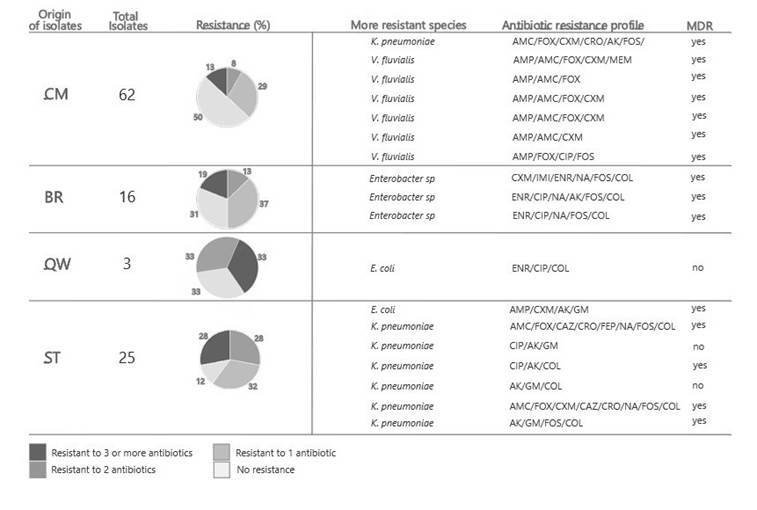
Figure 1: Antibiotic resistance profiles and multidrug resistance (MDR) among isolates obtained from treated poultry manure and soil samples. CM: composted poultry manure; BR: bioreactor-treated poultry manure; QW: Quick Wash-treated poultry manure; ST: agricultural soil after amendment application. Ampicillin (AMP), Cefoxitin (FOX), Cefuroxime (CXM), Ceftriaxone (CRO), Ceftazidime (CAZ), Cefepime (FEP), Amoxicillin-clavulanic acid (AMC), Imipenem (IMI), Amikacin (AK), Gentamicin (GM), Fosfomycin (FOS), Ciprofloxacin (CIP), Nalidixic Acid (NA), Enrofloxacin (ENR) and Colistin (COL)
Molecular screening of colistin-resistant isolates and K. pneumoniae ST258 clone
A subset of 35 isolates exhibiting phenotypic resistance to colistin according to pre-difusion test was screened for the presence of transferable colistin resistance genes. None of them tested positive for the mcr variants evaluated. Likewise, none of the 38 K. pneumoniae isolates were positive for pilv-I gene, indicating the absence of the ST258 clone in the analyzed isolates.
Discussion
Animal manure is recognized as a significant reservoir of antibiotic residues, resistant bacteria and antibiotic resistance genes (ARGs), representing an important link between agricultural practices and the emergence of antimicrobial resistance worldwide (Zhu et al., 2019).
Several studies have shown that land application of manure without adequate pretreatment causes ecosystem disturbance, significantly increasing the diversity and abundance of ARGs in agricultural soils, favoring their persistence and horizontal transfer in soil and watercourses (Heuer et al., 2011; Hu et al., 2016). In this work, we focused on the isolation of Enterobacteriaceae, which were isolated from both treated poultry manure and soil samples. Our findings are consistent with research documenting that manure-derived bacteria and pathogens can persist in soils for several weeks and even months (Chee-Sanford et al., 2009).
Even though STEC virulence genes were not observed, genes compatible with diarrheagenic EPEC were detected. This pathogen has a high capacity for persistence in the environment, particularly in soil, which underlines the importance of its monitoring and control (Ongeng et al., 2015). The role of external sources, such as irrigation water and certain agricultural practices, in the introduction and dissemination of these pathogens in soil has been documented (Gigliucci et al., 2025). Nevertheless, the available scientific literature reveals a scarcity of studies focusing on the monitoring of EPEC in the context of manure treatment or organic amendments.
In addition, a Salmonella isolate was detected in the bioreactor treatment (BR), consistent with previous reports describing its persistence after biological treatment processes (Tran et al., 2020). Although biological treatment processes may reduce bacterial loads, they may not completely eliminate certain pathogens. However, Salmonella was not detected in the soil samples amended with the BR material. Studies with more samples and isolates are needed to better assess the microbiological safety of this treatment.
Beyond primary zoonotic pathogens such as STEC and Salmonella spp., this study recovered several other Enterobacteriaceae, including Klebsiella spp., Enterobacter spp., Proteus spp., and Serratia spp., from treated poultry manure and agricultural soil samples. Although these bacteria are commonly considered opportunistic rather than primary zoonotic pathogens, their presence in agricultural matrices is relevant from a One Health perspective, particularly because several of these genera include clinically important organisms and may harbor antimicrobial resistance determinants.
Resistance to various antibiotics was detected, primarily to β-lactams, quinolones, aminoglycosides, and fosfomycin. Beta-lactam resistance in Enterobacteriaceae can be mediated by the expression of AmpC β-lactamases, a mechanism that predominantly occurs at the chromosomal level in several species. In our study, phenotypic patterns compatible with AmpC β-lactamase production were observed in isolates of Enterobacter spp., Klebsiella spp., and V. fluvialis. Enterobacter intrinsically harbors an inducible AmpC, which may also be associated with plasmid-borne elements in certain species. The expression of AmpC enables the hydrolysis of first- and second-generation cephalosporins, such as cephalothin, cefazolin, and cefoxitin, as well as most penicillins and β-lactamase inhibitor combinations (Tamma et al., 2019). The detection of isolates showing phenotypic patterns compatible with AmpC production in soil highlights the potential relevance of these environments for the persistence of antibiotic-resistant bacteria. Resistance to broad-spectrum cephalosporins, including CAZ and CRO, was observed in Klebsiella spp. isolates from the soil experiment. This phenotype may be compatible with increased AmpC activity, although the underlying mechanism was not genetically characterized in this study (Tamma et al., 2019, 2021).
Antibiotic-resistant Enterobacteriaceae isolates were detected recovered from all soil samples. Although definitive conclusions cannot be drawn regarding the reduction or persistence of resistant bacteria following the application of different amendments, the presence of antibiotic-resistant Enterobacteriaceae in the baseline soil is noteworthy, highlighting the issue of their occurrence in the natural environment. Several external factors, including irrigation water, proximity to animal and food-production facilities, and wildlife, may contribute to the introduction of antibiotic-resistant bacteria and resistance genes into agricultural soils (Franklin et al., 2024; Gigliucci et al., 2025).
All colistin-resistant isolates belonged to the Enterobacteriaceae family, but none carried mcr-1, mcr-2, mcr-5 or mcr-9 genes, which are widely recognized for their high potential for horizontal dissemination and global epidemiological relevance (Mmatli et al., 2022). The mcr-1 gene is the most broadly distributed worldwide, primarily found in bacteria such as E. coli, Salmonella enterica, and K. pneumoniae. In contrast, the mcr-2 gene, though less prevalent, has also been identified and remains a subject of study due to its potential for horizontal transmission (Hussein et al., 2021). Although none of the colistin-resistant isolates tested positive for these genes, it would be relevant to expand the search to include other variants, which have been described in the scientific literature (Martiny et al., 2022). In Uruguay, mcr-1 has already been documented in E. coli from both human infections and livestock feces, underscoring the importance of integrated One Health surveillance (Coppola et al., 2020; Papa-Ezdra et al., 2020). Furthermore, colistin resistance detected by the disk diffusion method was predominantly observed in Klebsiella spp. strains, consistent with previous studies reporting clinical isolates of this species lacking mcr genes (Niazadeh et al., 2022).
The detection of antibiotic-resistant Enterobacteriaceae across the evaluated treatment groups shows the occurrence of antimicrobial resistance in animal-derived amendments and agricultural soils, despite the application of different management strategies. These results highlight the potential role of poultry manure as a reservoir of resistant bacteria and reinforce the importance of monitoring antimicrobial resistance in agroecosystems relevant to animal production. However, due to the descriptive nature of this study and the reliance on phenotypic profiling, it is not possible to confirm whether specific bacterial strains persisted across treatments or if direct transmission occurred from manure to soil. High-resolution genomic approaches like Whole Genome Sequencing will be necessary in future studies to track specific bacterial lineages and mobile genetic elements across the manure-soil continuum.
Conclusion
In Uruguay, although the National Plan for Antimicrobial Resistance promotes the responsible use of antimicrobials and environmental protection, specific guidelines addressing antibiotic resistance associated with poultry manure are still limited (Ministerio de Salud Pública (MSP) et al., 2025). In this context, the present study provides original local evidence that supports the need to strengthen surveillance and mitigation measures, contributing to a more sustainable and sanitary management of animal manure within a One Health framework.
Acknowledgments
We would like to thank all the technicians and scientists involved in the FPTA-374 project for carrying out the amendments, collecting the samples and conducting the field trial: Amabelia del Pino, Gimena Arrarte, Laura Arló, Virginia Takata, Omar Casanova, Claudia Etchebehere, Natalia Bajsa, Natalia Rodríguez, Guillermo Zinola, Guillermo Espinosa, Gastón Carro, Leticia Rogel, Bruno Romano and Melanie Fagúndez.
We also thank Lic. Agustina Grisaro and Bq. Adriana Sucari from Laboratorio de Ensayos, Stamboulian (Argentina), for their support in the MALDI-TOF identification of the Salmonella enterica subsp. enterica isolate.
Financial support
This work was supported by an INIA project, code: FPTA-374.
References
Abreu, R., Semedo-Lemsaddek, T., Cunha, E., Tavares, L., & Oliveira, M. (2023). Antimicrobial Drug Resistance in Poultry Production: Current Status and Innovative Strategies for Bacterial Control. Microorganisms, 11(4), 953. https://doi.org/10.3390/microorganisms11040953
Ayilara, M. S., Olanrewaju, O. S., Babalola, O. O., & Odeyemi, O. (2020). Waste management through composting: Challenges and potentials. Sustainability, 12(11), 4456. https://doi.org/10.3390/su12114456
Bado, I., Papa-Ezdra, R., Delgado-Blas, J. F., Gaudio, M., Gutiérrez, C., Cordeiro, N. F., García-Fulgueiras, V., Araújo Pirez, L., Seija, V., Medina, J. C., Rieppi, G., Gonzalez-Zorn, B., & Vignoli, R. (2018). Molecular characterization of carbapenem-resistant Acinetobacter baumannii in the intensive care unit of Uruguay’s university hospital identifies the first rmtC gene in the species. Microbial Drug Resistance, 24(7), 1012-1019. https://doi.org/10.1089/mdr.2017.0300
Betancor, L., Pereira, M., Martinez, A., Giossa, G., Fookes, M., Flores, K., Barrios, P., Repiso, V., Vignoli, R., Cordeiro, N., Algorta, G., Thomson, N., Maskell, D., Schelotto, F., & Chabalgoity, J. A. (2010). Prevalence of Salmonella enterica in poultry and eggs in Uruguay during an epidemic due to Salmonella enterica serovar Enteritidis. Journal of Clinical Microbiology, 48(7), 2413-2423. https://doi.org/10.1128/jcm.02137-09
Casaux, M. L., Caffarena, R. D., Schild, C. O., Giannitti, F., Riet-Correa, F., & Fraga, M. (2019). Antibiotic resistance in Salmonella enterica isolated from dairy calves in Uruguay. Brazilian Journal of Microbiology, 50(4), 1139-1144. https://doi.org/10.1007/s42770-019-00151-w
Casaux, M. L., D’Alessandro, B., Vignoli, R., & Fraga, M. (2023). Phenotypic and genotypic survey of antibiotic resistance in Salmonella enterica isolates from dairy farms in Uruguay. Frontiers in Veterinary Science, 10, 1055432. https://doi.org/10.3389/fvets.2023.1055432
Chala, B., & Hamde, F. (2021). Emerging and re-emerging vector-borne infectious diseases and the challenges for control: A review. Frontiers in Public Health, 9, 715759. https://doi.org/10.3389/fpubh.2021.715759
Chee-Sanford, J. C., Mackie, R. I., Koike, S., Krapac, I. G., Lin, Y.-F., Yannarell, A. C., Maxwell, S., & Aminov, R. I. (2009). Fate and transport of antibiotic residues and antibiotic resistance genes following land application of manure waste. Journal of Environmental Quality, 38(3), 1086-1108. https://doi.org/10.2134/jeq2008.0128
Coppola, N., Cordeiro, N. F., Trenchi, G., Esposito, F., Fuga, B., Fuentes-Castillo, D., Lincopan, N., Iriarte, A., Bado, I., & Vignoli, R. (2022). Imported one-day-old chicks as trojan horses for multidrug-resistant priority pathogens harboring mcr-9, rmtG, and extended-spectrum β-Lactamase genes. Applied and Environmental Microbiology, 88(2), e01675-21. https://doi.org/10.1128/AEM.01675-21
Coppola, N., Freire, B., Umpiérrez, A., Cordeiro, N. F., Ávila, P., Trenchi, G., Castro, G., Casaux, M. L., Fraga, M., Zunino, P., Bado, I., & Vignoli, R. (2020). Transferable resistance to highest priority critically important antibiotics for human health in Escherichia coli strains obtained from livestock feces in Uruguay. Frontiers in Veterinary Science, 7, 588919. https://doi.org/10.3389/fvets.2020.588919
Echeverriborda, G., Mesa, F., Chalar, G., Kruk, C., & Piccini, C. (2022). Experiencia de aplicación de microorganismos efectivos nativos (MEN) para el tratamiento de aguas residuales. INNOTEC, (24), e623. https://doi.org/10.26461/24.06
Fernández, M., Casaux, M. L., Fraga, M., Vignoli, R., Bado, I., Zunino, P., & Umpiérrez, A. (2023). Shiga toxin-producing Escherichia coli (STEC) associated with calf mortality in Uruguay. Microorganisms, 11(7), 1704. https://doi.org/10.3390/microorganisms11071704
Franklin, A. M., Kariyawasam, S., Andrews, D. M., McLain, J. E., & Watson, J. E. (2024). Presence of antimicrobial-resistant bacteria and resistance genes in soil exposed to wastewater treatment plant effluent. Sustainability, 16(16), 7022. https://doi.org/10.3390/su16167022
García-Fulgueiras, V., Bado, I., Mota, M. I., Robino, L., Cordeiro, N. F., Varela, A., Algorta, G., Gutkind, G., Ayala, J. A., & Vignoli, R. (2011). Extended-spectrum β-lactamases and plasmid-mediated quinolone resistance in enterobacterial clinical isolates in the paediatric hospital of Uruguay. The Journal of Antimicrobial Chemotherapy, 66(8), 1725-1729. https://doi.org/10.1093/jac/dkr222
Gigliucci, F., Barbieri, G., Veyrunes, M., Chiani, P., Marra, M., Carollo, M., Knijn, A., Brambilla, G., & Morabito, S. (2025). Characterization of the resistome and antibiotic-resistant bacteria in top soil improvers and irrigation waters devoted to food production: a case study from Italy. Environmental Science and Pollution Research, 32(24), 14691-14705. https://doi.org/10.1007/s11356-025-36438-9
Gomez, S. A., Rapoport, M., Piergrossi, N., Faccone, D., Pasteran, F., De Belder, D., ReLAVRA-Group, Petroni, A., & Corso, A. (2016). Performance of a PCR assay for the rapid identification of the Klebsiella pneumoniae ST258 epidemic clone in Latin American clinical isolates. Infection, Genetics and Evolution: Journal of Molecular Epidemiology and Evolutionary Genetics in Infectious Diseases, 44, 145-146. https://doi.org/10.1016/j.meegid.2016.06.018
González Revello, A. (2020). Generación de métodos basados en genómica para detectar microorganismos nocivos en sistemas acuáticos (Tesis de maestría, Facultad de Ciencias, Universidad de la República). Repositorio Colibri. https://hdl.handle.net/20.500.12008/27665
Heuer, H., Solehati, Q., Zimmerling, U., Kleineidam, K., Schloter, M., Müller, T., Focks, A., Thiele-Bruhn, S., & Smalla, K. (2011). Accumulation of sulfonamide resistance genes in arable soils due to repeated application of manure containing sulfadiazine. Applied and Environmental Microbiology, 77(7), 2527-2530. https://doi.org/10.1128/AEM.02577-10
Hu, H.-W., Wang, J.-T., Li, J., Li, J.-J., Ma, Y.-B., Chen, D., & He, J.-Z. (2016). Field-based evidence for copper contamination induced changes of antibiotic resistance in agricultural soils. Environmental Microbiology, 18(11), 3896-3909. https://doi.org/10.1111/1462-2920.13370
Hussein, N. H., Al-Kadmy, I. M. S., Taha, B. M., & Hussein, J. D. (2021). Mobilized colistin resistance (mcr) genes from 1 to 10: a comprehensive review. Molecular Biology Reports, 48(3), 2897-2907. https://doi.org/10.1007/s11033-021-06307-y
Kaper, J. B., Nataro, J. P., & Mobley, H. L. T. (2004). Pathogenic Escherichia coli. Nature Reviews Microbiology, 2(2), 123-140. https://doi.org/10.1038/nrmicro818
Kyakuwaire, M., Olupot, G., Amoding, A., Nkedi-Kizza, P., & Ateenyi Basamba, T. (2019). How safe is chicken litter for land application as an organic fertilizer?: A review. International Journal of Environmental Research and Public Health, 16(19), 3521. https://doi.org/10.3390/ijerph16193521
Leibler, J. H., Otte, J., Roland-Holst, D., Pfeiffer, D. U., Soares Magalhaes, R., Rushton, J., Graham, J. P., & Silbergeld, E. K. (2009). Industrial food animal production and global health risks: Exploring the ecosystems and economics of avian Influenza. EcoHealth, 6(1), 58-70. https://doi.org/10.1007/s10393-009-0226-0
Magiorakos, A.-P., Srinivasan, A., Carey, R. B., Carmeli, Y., Falagas, M. E., Giske, C. G., Harbarth, S., Hindler, J. F., Kahlmeter, G., Olsson-Liljequist, B., Paterson, D. L., Rice, L. B., Stelling, J., Struelens, M. J., Vatopoulos, A., Weber, J. T., & Monnet, D. L. (2012). Multidrug-resistant, extensively drug-resistant and pandrug-resistant bacteria: an international expert proposal for interim standard definitions for acquired resistance. Clinical Microbiology and Infection: The Official Publication of the European Society of Clinical Microbiology and Infectious Diseases, 18(3), 268-281. https://doi.org/10.1111/j.1469-0691.2011.03570.x
Martiny, H.-M., Munk, P., Brinch, C., Szarvas, J., Aarestrup, F. M., & Petersen, T. N. (2022). Global distribution of mcr gene variants in 214K metagenomic samples. mSystems, 7(2), e00105-22. https://doi.org/10.1128/msystems.00105-22
Ministerio de Ganadería, Agricultura y Pesca. (2018). Resolución N° 97/018 DGSA: Requisitos para el registro y control para la comercialización de insumos formulados a partir de materia prima de origen orgánico para uso agrícola. Dirección General de Servicios Agrícolas. https://www.gub.uy/ministerio-ganaderia-agricultura-pesca/institucional/normativa/resolucion-n-97018-dgsa-requisitos-para-registro-control-para
Ministerio de Salud Pública, Ministerio de Ambiente, & Ministerio de Ganadería, Agricultura y Pesca. (2025). Plan de acción Nacional único contra la resistencia a los antimicrobianos en Uruguay: Período 2024-2028. https://www.gub.uy/ministerio-ambiente/sites/ministerio-ambiente/files/documentos/publicaciones/2025%20Plan%20de%20accion%20Nacional%20unico%20contra%20la%20RAM%20en%20Uruguay%202024-2028.pdf
Mmatli, M., Mbelle, N. M., & Osei Sekyere, J. (2022). Global epidemiology, genetic environment, risk factors and therapeutic prospects of mcr genes: A current and emerging update. Frontiers in Cellular and Infection Microbiology, 12, 941358. https://doi.org/10.3389/fcimb.2022.941358
Motlhalamme, T., Paul, L., & Singh, V. (2024). Environmental Reservoirs, Genomic Epidemiology, and Mobile Genetic Elements. In V. Soni & A. S. Akhade (Eds.), Antimicrobial Resistance: Factors to Findings (pp. 239-273). Springer. https://doi.org/10.1007/978-3-031-65986-7_7
Niazadeh, M., Nikkhahi, F., Robatjazi, S., Javadi, A., Farzam, S. A., Babaei, S., & Zeynali, P. (2022). Evaluation of mechanisms of colistin resistance in Klebsiella pneumoniae strains isolated from patients with urinary tract infection in ICU. Iranian Journal of Microbiology, 14(1), 31-37. https://doi.org/10.18502/ijm.v14i1.8798
Octavia, S., & Lan, R. (2014). The family Enterobacteriaceae. In E. Rosenberg, E. F. DeLong, S. Lory, E. Stackebrandt, & F. Thompson (Eds.), The Prokaryotes (pp. 225-286). Springer.
Ongeng, D., Geeraerd, A. H., Springael, D., Ryckeboer, J., Muyanja, C., & Mauriello, G. (2015). Fate of Escherichia coli O157:H7 and Salmonella enterica in the manure-amended soil-plant ecosystem of fresh vegetable crops: a review. Critical Reviews in Microbiology, 41(3), 273–294. https://doi.org/10.3109/1040841X.2013.829415
Papa-Ezdra, R., Grill Diaz, F., Vieytes, M., García-Fulgueiras, V., Caiata, L., Ávila, P., Brasesco, M., Christophersen, I., Cordeiro, N. F., Algorta, G., Galiana, A., & Vignoli, R. (2020). First three Escherichia coli isolates harbouring mcr-1 in Uruguay. Journal of Global Antimicrobial Resistance, 20, 187-190. https://doi.org/10.1016/j.jgar.2019.07.016
Price, L. B., Graham, J. P., Lackey, L. G., Roess, A., Vailes, R., & Silbergeld, E. (2007). Elevated risk of carrying gentamicin-resistant Escherichia coli among U.S. poultry workers. Environmental Health Perspectives, 115(12), 1738-1742. https://doi.org/10.1289/ehp.10191
Samreen, I., Ahmad, I., Malak, H. A., & Abulreesh, H. H. (2021). Environmental antimicrobial resistance and its drivers: A potential threat to public health. Journal of Global Antimicrobial Resistance, 27, 101-111. https://doi.org/10.1016/j.jgar.2021.08.001
Szogi, A. A., Vanotti, M. B., & Ro, K. S. (2015). Methods for treatment of animal manures to reduce nutrient pollution prior to soil application. Current Pollution Reports, 1(1), 47-56. https://doi.org/10.1007/s40726-015-0005-1
Tamma, P. D., Aitken, S. L., Bonomo, R. A., Mathers, A. J., van Duin, D., & Clancy, C. J. (2021). Infectious diseases society of america guidance on the treatment of AmpC β-Lactamase-producing Enterobacterales, carbapenem-resistant Acinetobacter baumannii, and Stenotrophomonas maltophilia infections. Clinical Infectious Diseases, 74(12), 2089-2114. https://doi.org/10.1093/cid/ciab1013
Tamma, P. D., Doi, Y., Bonomo, R. A., Johnson, J. K., Simner, P. J., & Antibacterial Resistance Leadership Group. (2019). A primer on AmpC β-Lactamases: Necessary knowledge for an increasingly multidrug-resistant world. Clinical Infectious Diseases: An Official Publication of the Infectious Diseases Society of America, 69(8), 1446-1455. https://doi.org/10.1093/cid/ciz173
Tran, D. T. Q., Bradbury, M. I., Ogtrop, F. F. V., Bozkurt, H., Jones, B. J., & McConchie, R. (2020). Environmental drivers for persistence of Escherichia coli and Salmonella in manure-amended Soils: A meta-analysis. Journal of Food Protection, 83(7), 1234-1245. https://doi.org/10.4315/0362-028X.JFP-19-460
Ullah, S. R., Jamal, M., Rahman, A., & Andleeb, S. (2024). Comprehensive insights into Klebsiella pneumoniae: Unravelling clinical impact, epidemiological trends and antibiotic-resistance challenges. Journal of Antimicrobial Chemotherapy, 79(7), 1484-1492. https://doi.org/10.1093/jac/dkae184
Umpiérrez, A., Ernst, D., Cardozo, A., Torres, A., Fernández, M., Fraga, M., Vignoli, R., Bado, I., Vidal, R., & Zunino, P. (2022). Non-O157 Shiga toxin-producing Escherichia coli with potential harmful profiles to humans are isolated from the faeces of calves in Uruguay. Austral Journal of Veterinary Sciences, 54(2), 45-53. http://dx.doi.org/10.4067/S0719-81322022000200045
van den Bogaard, A. E., London, N., Driessen, C., & Stobberingh, E. E. (2001). Antibiotic resistance of faecal Escherichia coli in poultry, poultry farmers and poultry slaughterers. The Journal of Antimicrobial Chemotherapy, 47(6), 763-771. https://doi.org/10.1093/jac/47.6.763
Van Fan, Y., Lee, C. T., Klemeš, J. J., Chua, L. S., Sarmidi, M. R., & Leow, C. W. (2018). Evaluation of effective microorganisms on home scale organic waste composting. Journal of Environmental Management, 216, 41-48. https://doi.org/10.1016/j.jenvman.2017.04.019
World Health Organization. (2024). WHO bacterial priority pathogens list, 2024: bacterial pathogens of public health importance, to guide research, development, and strategies to prevent and control antimicrobial resistance. WHO. https://www.who.int/publications/i/item/9789240093461
Xu, L., Wang, N., Li, F., Yan, B., Pan, J., Jiang, S., Peng, H., Chen, A., Wu, G., Zhang, J., Zhang, L., Huang, H., & Luo, L. (2022). Evaluation of the synergistic effects of biochar and biogas residue on CO₂ and CH₄ emission, functional genes, and enzyme activity during straw composting. Bioresource Technology, 360, 127608. https://doi.org/10.1016/j.biortech.2022.127608
Zhu, Y.-G., Zhao, Y., Zhu, D., Gillings, M., Penuelas, J., Ok, Y. S., Capon, A., & Banwart, S. (2019). Soil biota, antimicrobial resistance and planetary health. Environment International, 131, 105059. https://doi.org/10.1016/j.envint.2019.105059
Contribution Note
1.Conceptualization, 2.Data curation, 3.Formal analysis, 4.Funding acquisition, 5.Investigation, 6.Methodology, 7.Visualization, 8.Writing-original draft, 9.Writing-review & editing.
Y. Figueroa contribiuted in: 1,2,3,5,6,8; C. Stoletniy: 2; J. Posada: 2; J. Silvera: 2; P. Zunino: 1,4,6, 7,9. A. Umpiérrez: 1,2,3,4,5,6,7,8,9.
Data Availability
The dataset supporting the results of this study is included within the article.
Nota del editor
El editor José Manuel Verdes aprobó este artículo.